
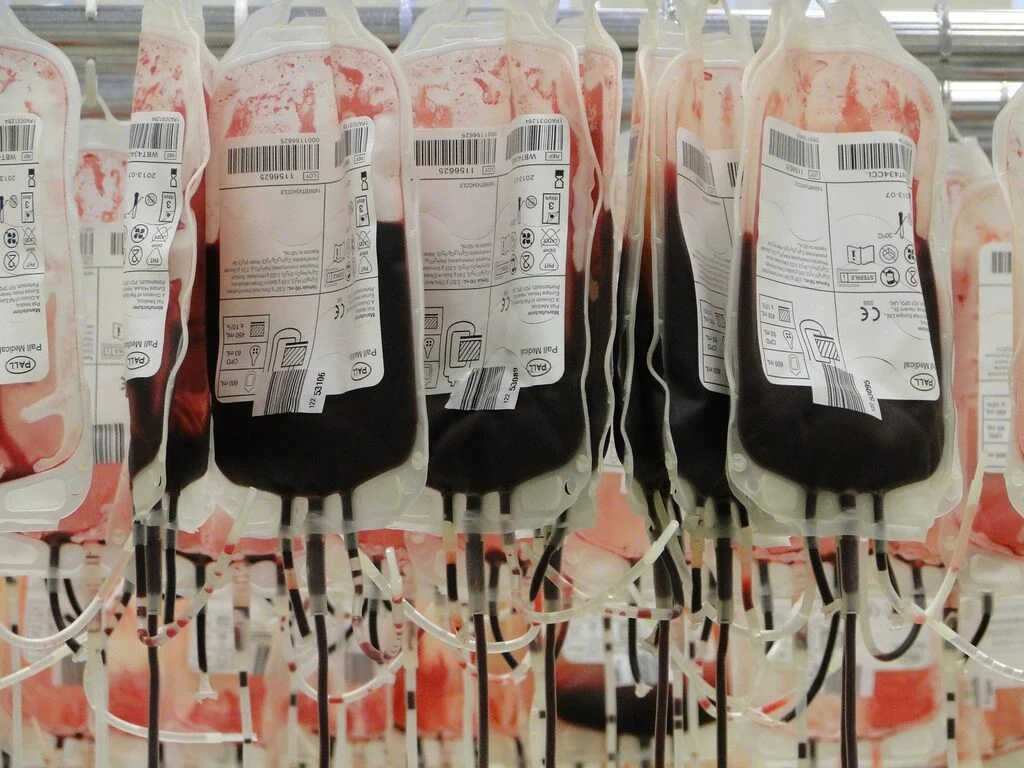
- Up to 3 people can be helped by one whole blood donation. Give four times a year and that’s up to 12.
- 10–90 min in the chair. About 10 for whole blood, 45 for plasma and 90 for platelets.
- 48 hours and the fluid is back after whole blood. Red cells take a few weeks, platelets just a few days.
Why it matters
Donated blood goes to people in surgery, to accident and trauma patients, to mothers who bleed heavily during childbirth, to children and adults with cancer, and to people with conditions like sickle cell disease or thalassaemia who need transfusions for life.
It doesn’t keep for long. Red cells last up to about six weeks, and platelets only about a week. So supplies need topping up all the time, not just after a disaster makes the news. That’s why regular donors matter most.
Ways to give
Whole blood
- About 10 min to give
- About 1 hour in total
- Every 8–16 weeks
The classic donation: just under half a litre (about a pint), taken from a vein in your arm. It’s where almost everyone starts. Afterwards it’s separated into red cells, plasma and platelets, so one donation can help up to three people. How often you can give depends on your country, usually every 8 to 16 weeks.
Platelets
- About 90 min to give
- As often as every 1–2 weeks
Platelets help blood clot. They’re most often given to children and adults with leukaemia and other cancers, whose treatment stops their bodies making enough, and to people having bone marrow or organ transplants, heart surgery, or bleeding badly after an accident or childbirth.
A machine collects only the platelets and returns the rest of your blood to you. Your body replaces them within a few days, so you can usually give much more often than whole blood. Platelets last only about a week, which is why they’re always in short supply. Many services invite regular whole blood donors to switch.
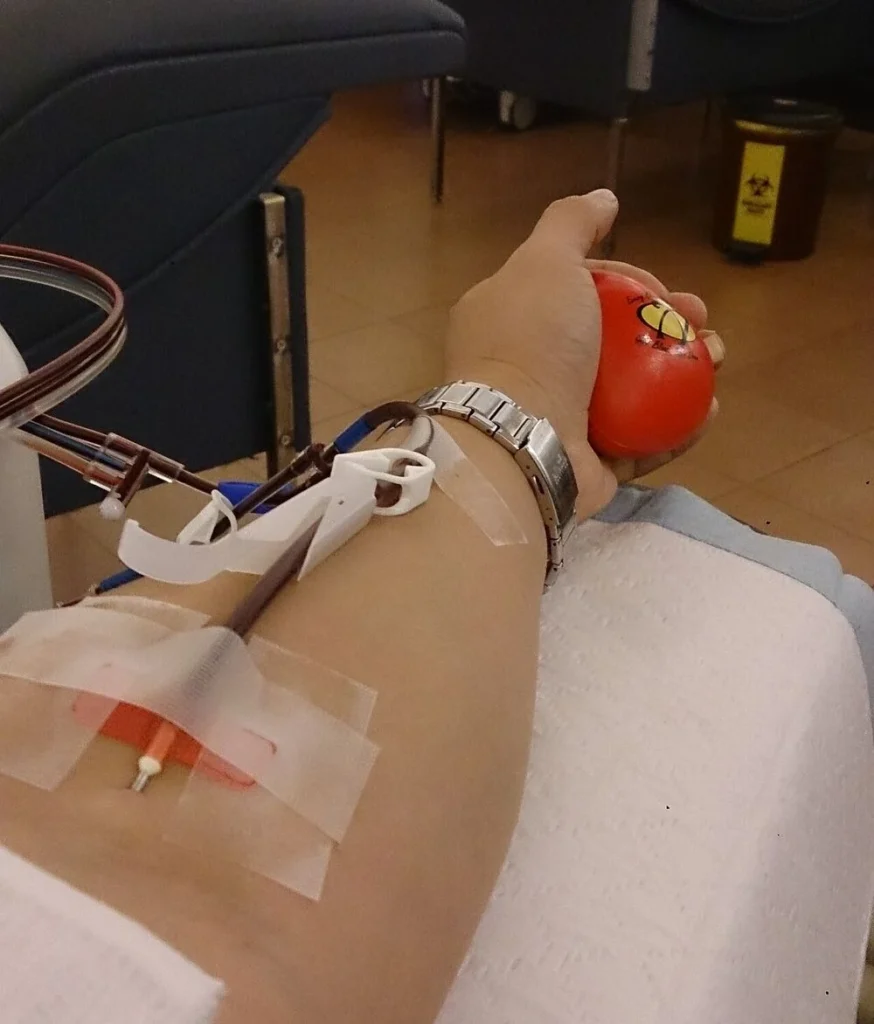
Plasma
- About 45 min to give
- As often as every 1–2 weeks
Plasma is the straw-coloured liquid part of blood. It’s used for burns, trauma and heavy bleeding, and to make medicines for people with immune and clotting disorders. A machine collects the plasma and returns your red cells. Not every country collects plasma from volunteers, so check with your blood service.
Who can give
More people than you might think. The exact rules belong to your local blood service, but in most places you can give if you:
- are in good health and feeling well on the day,
- are an adult, usually from 17 or 18 (16 in some places, with consent), and
- weigh at least 50 kg (about 110 lb).
Some things mean waiting a while before you give, such as a cold or infection, a recent tattoo or piercing, some medicines, recent travel to certain areas, pregnancy, or a recent birth. Most of these are temporary. Every blood service has an online check or a phone line, so a quick look before booking saves a wasted trip.
Find your blood service and its eligibility check
Know your blood type
Don’t know your blood type? Giving blood is one of the easiest ways to find out: most blood services tell you after your first donation, often in their app or on a donor card. Every type is needed. Two are special:
- O− Red cells almost anyone can receive, so emergency teams reach for them before they know a patient’s type.
- AB Plasma anyone can receive, which makes AB donors especially useful for plasma and platelets.
A small health check along the way
Before you give, staff usually check your iron (haemoglobin) with a finger-prick test, and sometimes your blood pressure and pulse. Afterwards, every donation is tested for infections such as HIV, hepatitis B, hepatitis C and syphilis. If a result needs attention, the blood service will contact you and help you get care.
Please don’t give blood just to get tested. Tests can miss very recent infections, so a clinic or your doctor is the right place if you think you might have been exposed.
Your local blood service has the final word. Rules differ between countries and change over time. We keep things general and link to official sources. If anything here disagrees with your blood service, trust them.
Ready when you are.
Find your local blood service, check whether you can give, and book a slot. It takes about an hour and could help up to three people.